
Want to trim cat nails like a pro? Is your cat clawing your furniture into shreds and drawing blood daily? Every good cat owner must know how to trim cat claws. Not doing so is bad for your health and theirs.
In the wild, felines can do their own nail trimming by clawing objects like tree trunks. In your home, your cat doesn’t have easy access to trees. And overly-sharp claws can get caught and tear the entire claw off, which is like someone tearing off your fingernails with a pair of pliers. Painful and an expensive vet visit. Sure, you’re providing a cat tree or a scratching post, but unsurprisingly, your cat’s nails are still sharp as needles, and your cat is cutting your skin without even trying. A responsible owner needs to know how trim cat nails.
If you find yourself bleeding every time you interact with your cat, it’s not your cat’s fault. It’s yours. Your cat should be able to touch you without cutting you. If they can’t, it’s probably because you haven’t been using your cat’s nail clipper.
How to Trim 1: Integrate with Affection
It’s a slow process, but get your cat used to paw touches. Start with the back of the paw, and carefully advance to the pad. If your cat gets wary as soon as you touch a paw, you’ll need to work up to doing trims. Wear gloves and long sleeves if you have to.
Once your cat can tolerate paw touches as part of your natural closeness, you’re ready for trimming.
How to Trim 2: Be Patient
I have a good friend who was surprised to see how I trimmed my cat’s nails. He told the story of how he’d really bonded with a cat he was petsitting, but when he tried to trim those sharp claws, it hurt the rapport they’d built together. The cat looked at him resentfully because he’d used his superior strength and forced a complete cut on those nails.
Why was he surprised by my technique? My cat doesn’t love the nail trimming, so I exercise patience. He saw me grab my trimmer, clip a few nails, and then… I put it down when the cat started to get fussy and annoyed. My secret is just to take whatever my cat gives me and no more. She’ll usually fight and pull away, but I try to be quick and decisive and clip what I can get, and when she starts to squirm with her whole body or act anxious, I leave it be. At first, just one or two claws are a big success and all you can expect from an attempt.
Your cat may be shy and averse to being held. Work up to it and integrate your best petting and brushing techniques with your nail trimming. My cat used to hate being held, but now she can tolerate quite a bit of physical attention before she starts to show displeasure. When I hold and pet her, I often stroke her paws and check the claws for sharpness. If you can get your cat to this stage without drama, you’re 90% home free.
Want to feed your pet the best cheap cat food? We’ve dived deep in on this one and here are the winners.
Does your cat refuse to drink water? Maybe it’s your bowl.
How to Trim 3: Don’t Overpower Your Cat
You can cause a lot of pain if you overpower your cat. Be aware that, when your cat’s panicked, they can do harm to themselves, or even try to leap away while you’re firmly gripping a delicate paw. You want to be firm but flexible. It’s not a deathgrip; it’s a tender parental hold. Don’t put your whole body weight on the cat or try to immobilize them.
Think of cat nail trimming as an extension of cuddle time, not a painful chore or a confrontation. Trim when your cat is relaxed and drowsy, not when they’re chasing butterflies or feeling anxious. It’s best to work with plenty of space in a stable environment, too. A firm paw hold is not that different from a tight embrace.
Focus on one paw at a time, and ideally just hold the paw, not the entire cat. If the cat is very protective and wary, try having the cat’s favorite human hold and stroke the cat while another human holds a paw and does the clipping. Use treats to reward your cat after successes.
How to Trim 4: Where and How to Cut
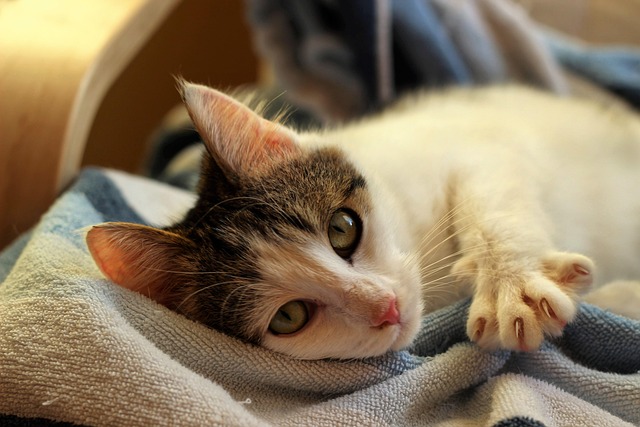
Don’t clip too much of the nail. To be safe, just clip the sharpest 25% of the nail until you get a feel for how your cat’s claws are built. The sharpest part of the nail is very thin, transluscent white, and easy to clip; the sensitive part of the claw is much thicker and often darker. It’s tricky when they’re struggling but like a cat, work fast, wait for moments when the claw isn’t moving, and be decisive
Most cats have four claws on each back paw and five on the front paws (four plus a “dewclaw,” which is offset like a thumb). Older cats may have thicker nails, which means you’ll want a stronger nail clipper that won’t wrench the claw around when you try to trim. If your cat is facing you, you want to keep the blades of the clippers horizontal and point the nail clippers at their tail (or the opposite direction, which is fine too).
Some people swear by scissors; we use standard cat clippers, which are nimble and strong. There are a variety of interesting tools for this purpose too. We like the idea of a clipper that has a depth guard to prevent cutting too much nail. Similarly, a quiet motorized clipper may make the clipping faster and less frightening to an already sensitive feline. Dull blades, by the way, will cause more pain to the soft tissue around the nail.
If you clip too much, of course, your cat will experience pain and bleed a little on your carpets. Try to comfort them with treats and cuddles. Toilet paper will both absorb blood and enhance the clotting process. If it is slow to stop bleeding, don’t panic. Get some clotting powder, put it in a little tray or bowl, and get your cat to step in the powder. It’s magic and will save you a trip to the vet. But if the cat is limping or in pain, take them to get help.
Cat Nail Trimming Tips
- Integrate the nail trimming with cuddles. Touch your cat’s paws when you pet them. Just a little at first, until it becomes part of the affection. Ideally your cat will enjoy having their paw pads rubbed. Mine doesn’t, but she tolerates it, and that’s enough for me to get complete nail trims all the time. I usually can’t get a whole paw in a session, though.
- Don’t use scissors or other tools. Cat clippers are inexpensive and worth it for the control and safety.
- Remember which claws are still sharp so you can get them next time.
- Get them when they’re sleeping. Usually they’ll take a few minutes to get their reflexes going.
- Stay calm and move slowly. They’ll do the same.
- If your cat is really combative and likes to bite, a cone of shame may be the answer to do this safely.
- Integrate a treat if you need to.
- Don’t forget the dewclaws. Those can easily turn ingrown if ignored.
- If you’re struggling, just have your vet or Petsmart/Petco groomer take care of it. Watch their technique carefully and pick their brains for all the tips!
